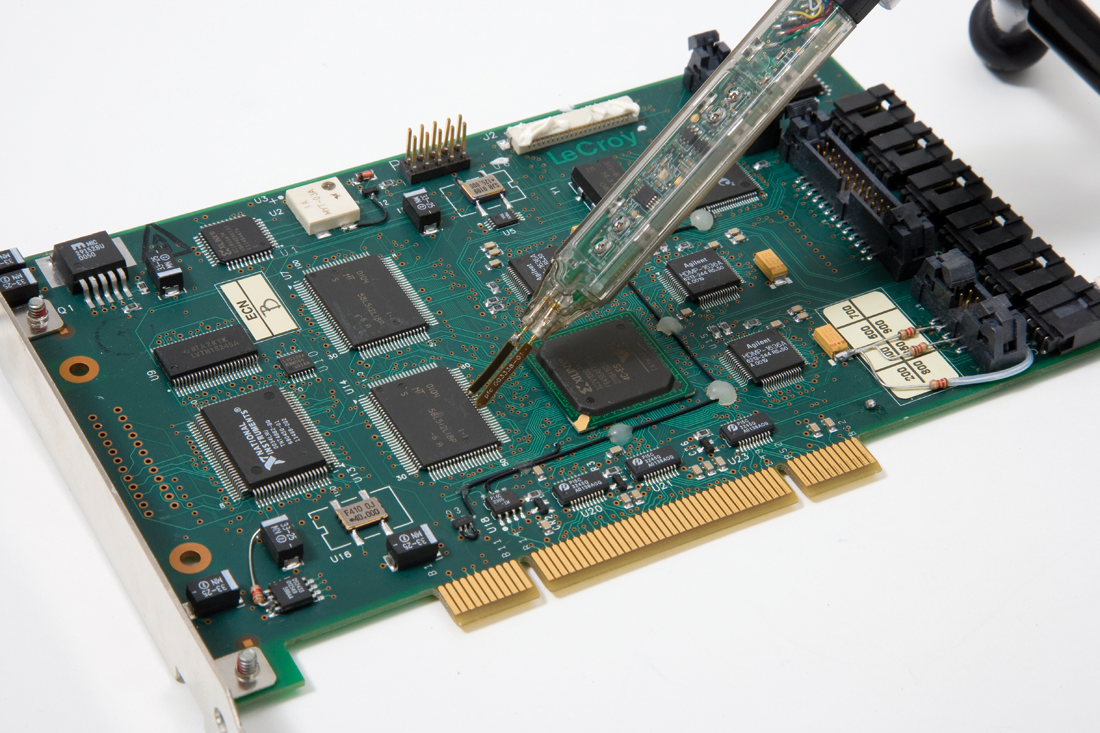
DDR Memory Test Solutions

Home / Test & Measure Solutions / DDR Memory Test

A DDR memory test is essential for verifying the performance, stability, and compliance of modern memory modules used in high-speed computing systems. As technologies such as DDR4 and DDR5 operate at increasingly higher data rates, specialised DDR memory test solutions are required to evaluate signal integrity, timing accuracy, and protocol behaviour. These testing systems support various stages of development and production, including design validation, compliance testing, and manufacturing quality assurance. By enabling engineers to analyse electrical characteristics and confirm alignment with JEDEC standards, DDR memory test platforms help ensure reliable memory performance while reducing development risks and improving product consistency.

What Is DDR Memory Testing?

DDR memory testing refers to the process of evaluating the performance, reliability, and compliance of memory interfaces used in modern digital systems. A DDR memory test focuses on validating DDR (Double Data Rate) memory interfaces through a combination of signal integrity validation, timing analysis, protocol compliance checks, and electrical margin testing. These tests ensure that memory devices and controllers communicate correctly at high data rates while maintaining stable signal behaviour across the interface.

DDR memory testing is commonly performed to verify alignment with JEDEC standards and to support high-speed memory validation for embedded platforms, servers, and computing systems. By identifying timing mismatches, signal distortions, or protocol errors early in the development cycle, engineers can ensure memory subsystems operate reliably in real-world applications.

Filters

Explore Our DDR Memory Test Equipment

Discover a comprehensive range of DDR memory test equipment, including the WaveMaster 8000HD Oscilloscopes and WavePro HD Oscilloscopes. Designed to support every stage of modern memory development, from bring-up to compliance validation.

These solutions enable engineers to analyse DDR and LPDDR interfaces across electrical, timing, and protocol domains, supporting accurate signal integrity analysis and JEDEC compliance testing.

Complemented by tools such as QualiPHY 2 Automated Compliance Software and DDR Debug Toolkit, these systems offer capabilities like command bus triggering, protocol decoding, and eye diagram analysis.

Suitable for engineering labs, validation teams, and manufacturing environments, they help accelerate debugging, improve test efficiency, and ensure consistent, reliable memory verification.

Teledyne LeCroy low noise differential probe

Low Noise Differential Probes

The Teledyne LeCroy low noise differential probe collection includes a diverse range of differential probes tailored for high-precision signal measurements. These probes span from low-bandwidth models like the ZD Series (up to 1.5 GHz) and ZD200 (200 MHz) for automotive and general-purpose use, to high-bandwidth options such as the DH Series (8-30 GHz) for PCIe and DDR systems. The WaveLink System (4-6 GHz) offers superior signal fidelity for high-speed DDR signals, while the AP033 Active Differential Probe excels in capturing high-speed differential signals with bandwidth up to 500 MHz. With various tips and compatibility across multiple devices, these probes address diverse testing needs across industries.

wavepro-hd-embedded-6505

WavePro HD

The Teledyne LeCroy WavePro HD Oscilloscope combines high resolution and advanced features for precise signal analysis. Equipped with HD4096 technology, it delivers 12-bit resolution all the time, up to 8 GHz bandwidth, and 20 GS/s sampling rate. With an industry-leading acquisition memory of up to 5 Gpts, it allows detailed capture of long-duration signals. Its intuitive MAUI user interface, 15.6” full HD touchscreen, and extensive analysis toolsets make it ideal for debugging embedded systems, power integrity validation, and high-speed serial data testing. The WavePro HD is the ultimate solution for engineers demanding accuracy and reliability in complex system diagnostics.

Bandwidth Selection:

2.5 GHz, 4 GHz, 6 GHz, 8 GHz

Resolution:

12 Bits

Sampling Rate:

10 GS/s, 20 GS/s interleaved

Max Memory:

5 Gpts

Channels:

4

WM8KHD

WaveMaster 8000HD

Experience unmatched performance with the WaveMaster 8000HD, a high-speed oscilloscope designed for professionals who demand precision. With a bandwidth of up to 65 GHz, 12-bit resolution, and a sampling rate of 320 GS/s, these oscilloscopes deliver exceptional accuracy for advanced applications like DDR memory testing. Their 8 GPts of maximum memory and multi-channel capability make them an excellent choice for engineers looking to buy oscilloscopes that support complex signal analysis.

Bandwidth Selection:

6 GHz, 8 GHz, 13 GHz, 16 GHz, 20 GHz, 25 Ghz, 33 GHz, 50 GHz, 59 GHz, 65 GHz

Resolution:

12 Bits

Sampling Rate:

Up to 320 GS/s

Max Memory:

200 Mpts/ch, Up to 8 Gpts

Channels:

4

Applications of DDR Memory Test Systems

System Design Verification

Engineers use DDR memory test systems to confirm that memory interfaces function correctly within a new hardware design. This helps ensure stable communication between processors, memory modules, and system components.

Product Development and Debugging

A DDR memory test helps development teams identify issues during early product development. Engineers can analyse memory behaviour and resolve faults before the system moves to final production.

Manufacturing and Quality Assurance

Manufacturers use DDR memory test systems to check memory performance during production. This helps ensure each device meets quality requirements before it is deployed in computing or embedded systems.

Supported DDR Memory Standards

Different generations of DDR memory are designed to meet varying performance and power requirements across computing and embedded systems. Understanding these standards helps engineers choose the appropriate platform for validation and DDR memory test processes.

DDR3

DDR3 was widely used in earlier desktop, server, and embedded systems. It provides moderate data transfer speeds and lower power consumption compared to earlier generations, making it suitable for legacy platforms and long-lifecycle industrial equipment.

DDR4

DDR4 introduced higher bandwidth and improved efficiency compared to DDR3. It supports faster data rates, greater memory capacity, and improved power management, which made it common in modern computing systems and enterprise hardware.

DDR5

DDR5 represents the latest generation of high-performance memory. It delivers significantly higher bandwidth, improved power efficiency, and architectural enhancements that support demanding workloads in next-generation computing and data processing environments.

LPDDR4

LPDDR4 (Low Power DDR4) is designed for devices that prioritise energy efficiency. It reduces power consumption while maintaining strong performance, making it suitable for mobile devices and compact embedded systems.

LPDDR5

LPDDR5 improves on LPDDR4 with faster data transfer speeds and better power optimisation. It is commonly used in advanced mobile platforms, edge devices, and modern embedded computing systems that require both speed and efficiency.

Why Accurate DDR Memory Test Matters

As memory technologies continue to evolve, the speed and complexity of modern memory interfaces place greater demands on validation and measurement. An accurate DDR memory test helps engineers detect potential issues early and ensure memory subsystems operate reliably across different environments and workloads.

1. Higher Data Rates Require Precise Timing Validation

As DDR memory speeds increase, timing margins become tighter. Precise testing helps ensure signals are transmitted and received within acceptable timing windows to prevent data errors.

At higher operating frequencies, signal quality becomes more sensitive to noise, interference, and trace design. Accurate testing allows engineers to identify signal degradation and maintain stable communication across the memory interface.

Small variations in components and assembly can impact how memory systems perform. A reliable DDR memory test helps detect inconsistencies and ensures stable operation across large production volumes.

Frequently Asked Questions

When should DDR memory testing be performed during development?

DDR memory testing is typically performed at several stages of the product lifecycle, including early design validation, system integration, and pre-production verification. Running a DDR memory test at these stages helps engineers identify potential interface issues before the system moves into manufacturing. Early validation can reduce redesign costs and improve development timelines.

DDR memory testing is important because modern memory operates at very high data speeds, where small errors can affect system stability. A DDR memory test helps identify timing mismatches, signal issues, or interface faults before products are deployed. This supports reliable performance in servers, embedded devices, and computing systems.

DDR memory testing is performed using specialised measurement and validation equipment designed for high-speed memory interfaces. Engineers run a DDR memory test to analyse data transfer behaviour, monitor signal quality, and verify correct communication between components. These tests may be conducted during hardware development, validation, or manufacturing stages.

Many digital platforms require DDR memory testing, including servers, embedded systems, networking equipment, and high-performance computing devices. A DDR memory test ensures that the memory subsystem works correctly within these platforms under different operating conditions. This is particularly important for systems that process large amounts of data.

The main difference between DDR4 and DDR5 testing lies in the higher speeds and architectural changes introduced with DDR5. A DDR memory test for DDR5 typically requires more advanced measurement capability to handle faster data rates and tighter timing margins. DDR5 systems may also require additional validation for new features introduced in the memory architecture.

The duration of DDR memory testing depends on the complexity of the system and the type of tests being performed. A DDR memory test may take anywhere from several minutes for automated checks to several hours for detailed validation and debugging. Comprehensive testing often includes multiple test cycles to confirm stability under different operating conditions.