
Discover our advanced power analyzers, designed to deliver accurate measurements, reliable data, and seamless integration into your test environments.
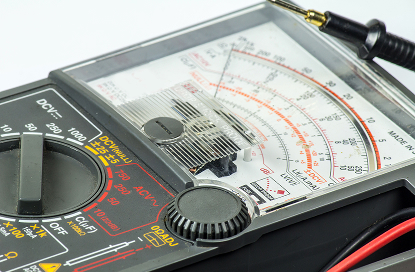
Ideal for basic testing needs, these analyzers measure electrical performance in single-phase systems commonly found in residential and small-scale equipment testing.
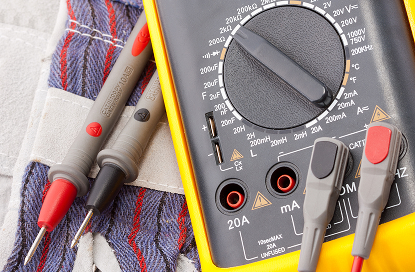
Designed for industrial and commercial environments, three-phase analyzers provide detailed data on complex power systems. These are essential for evaluating motors, generators, and grid-connected equipment.
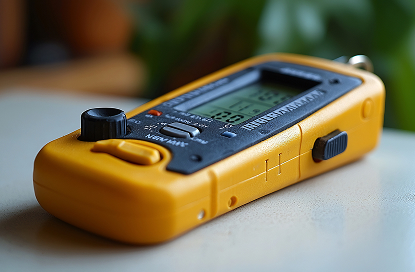
Lightweight and easy to use in the field, portable analyzers are suitable for site inspections, troubleshooting, and energy audits where mobility and quick setup are required.

Advanced instruments that combine high accuracy with digital processing capabilities, enabling faster sampling rates, clearer visualization, and integration with modern test systems.
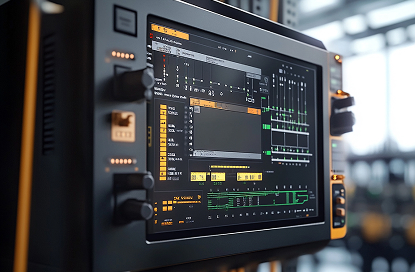
Devices that monitor and assess issues such as harmonics, transients, voltage sags, and interruptions. These ensure compliance with power quality standards and help maintain system reliability.
At Genetron, we offer a comprehensive selection of power analyzers tailored to diverse testing requirements.

Suitable for single-phase, three-phase, and complex multi-phase systems.
Delivers reliable results across voltage, current, power, frequency, harmonics, and more.
Capable of handling a wide spectrum of frequencies, supporting diverse applications from electronics to power systems.
Compatible with a variety of current and voltage sensors for versatile measurement setups.
Designed to align measurements across multiple channels and instruments for consistent, accurate data.
Offers options for PC connectivity, remote monitoring, and integration with other test and measurement equipment.
Beyond electrical parameters, power analyzers can also support additional inputs such as temperature, torque, or digital signals, depending on configuration.
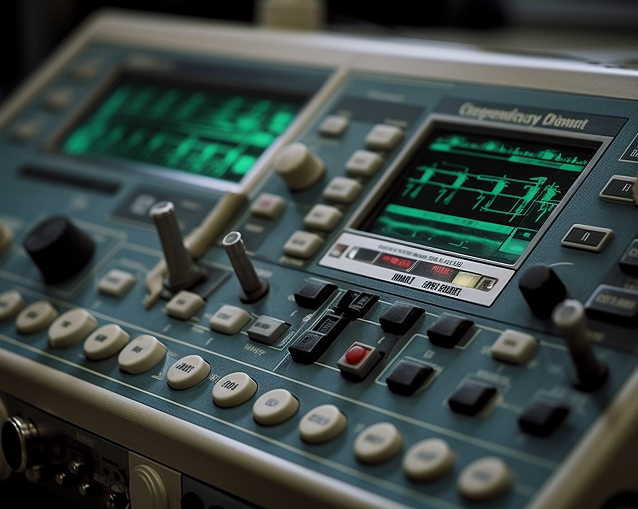
Power analyzers play a vital role across many industries, helping professionals gain precise insights into electrical performance. Common applications include:
Used to measure the performance of appliances, electronics, and industrial equipment, power analyzers help engineers refine designs, optimize efficiency, and ensure new products meet required standards.
Essential for demonstrating compliance with international efficiency regulations, these instruments provide accurate data that supports sustainability initiatives and reduces operational costs.
By evaluating inverters, converters, and motor drives, power analyzers reveal details about switching behavior, harmonics, and overall efficiency. This enables the creation of more reliable and energy-efficient systems.
Applied to solar panels, wind turbines, and energy storage technologies, they provide critical insights that help optimize energy generation, grid integration, and long-term reliability.
In production environments, power analyzers monitor consistency and performance, helping detect issues early and ensuring products function as intended once deployed.
Confirm whether the analyzer supports both AC and DC measurements. This ensures flexibility when testing a wide range of devices, from consumer appliances to industrial equipment.
Check that the power analyzer can handle the frequency range of your application and provide detailed harmonic analysis. This is essential for evaluating power electronics, identifying distortions, and ensuring compliance with power quality standards.
Choose an analyzer that offers the precision required for your work. High-accuracy instruments are indispensable in R&D and compliance testing, while standard applications may not require the same level of resolution.
Consider the safety protections built into the power analyzer, especially if you are testing high-voltage systems. Features such as isolation, overload protection, and compliance with safety standards help safeguard both operators and equipment.
Look for data interfaces and integration capabilities that suit your workflow. Options like USB, LAN, or software integration allow for efficient data logging, remote monitoring, and streamlined reporting.
Ensure that the power analyzer can be calibrated easily and reliably. Regular calibration maintains measurement accuracy over time and ensures consistent performance across projects.
A power meter typically provides basic readings of energy usage, while a power analyzer delivers deeper analysis. This includes advanced parameters like harmonics, power factor, and system efficiency.
A power analyzer can capture a wide range of parameters, including:
Some models also support advanced measurements such as efficiency, energy consumption, and transient analysis, depending on the application.
An oscilloscope is designed to visualize waveforms, showing how signals change over time. In contrast, a power analyzer calculates and analyzes electrical parameters such as power, efficiency, and harmonics. While oscilloscopes are great for troubleshooting signal shape, power analyzers provide deeper insights into system performance and energy use.
Portable power analyzers are designed for flexibility and field use, offering dependable results for site inspections, energy audits, and troubleshooting. However, benchtop or laboratory models typically provide higher accuracy, broader input options, and advanced analysis features, making them more suitable for detailed research and compliance testing.
By identifying inefficiencies in power usage, a power analyzer helps optimize equipment performance. This supports cost savings and compliance with energy standards.
Yes, regular calibration is necessary to keep measurements consistent and reliable. It helps maintain long-term accuracy, especially in critical applications where precise data is essential.
At Genetron, we support our clients by providing guidance on calibration needs, ensuring that your power analyzers continue to deliver dependable performance over time.
